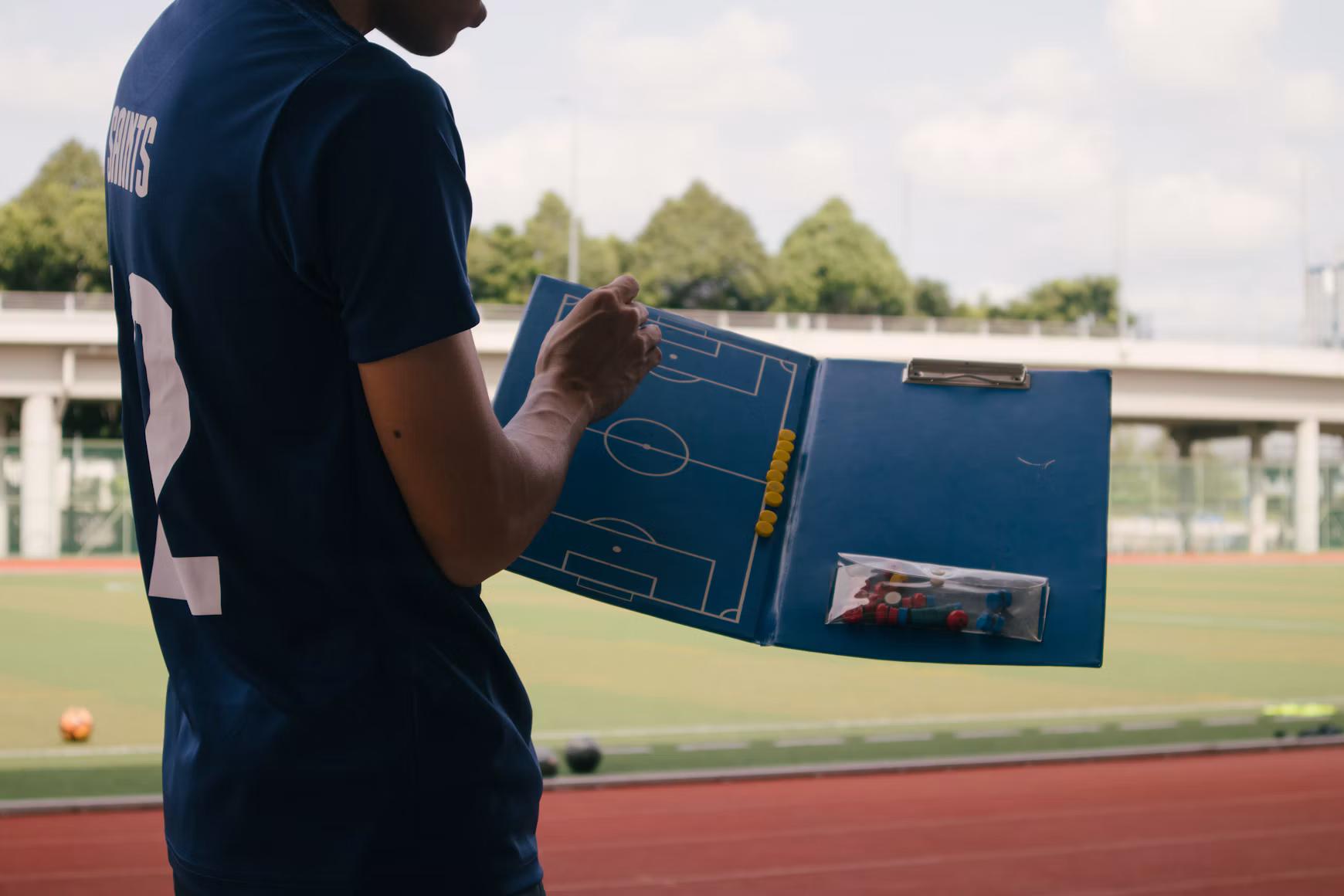
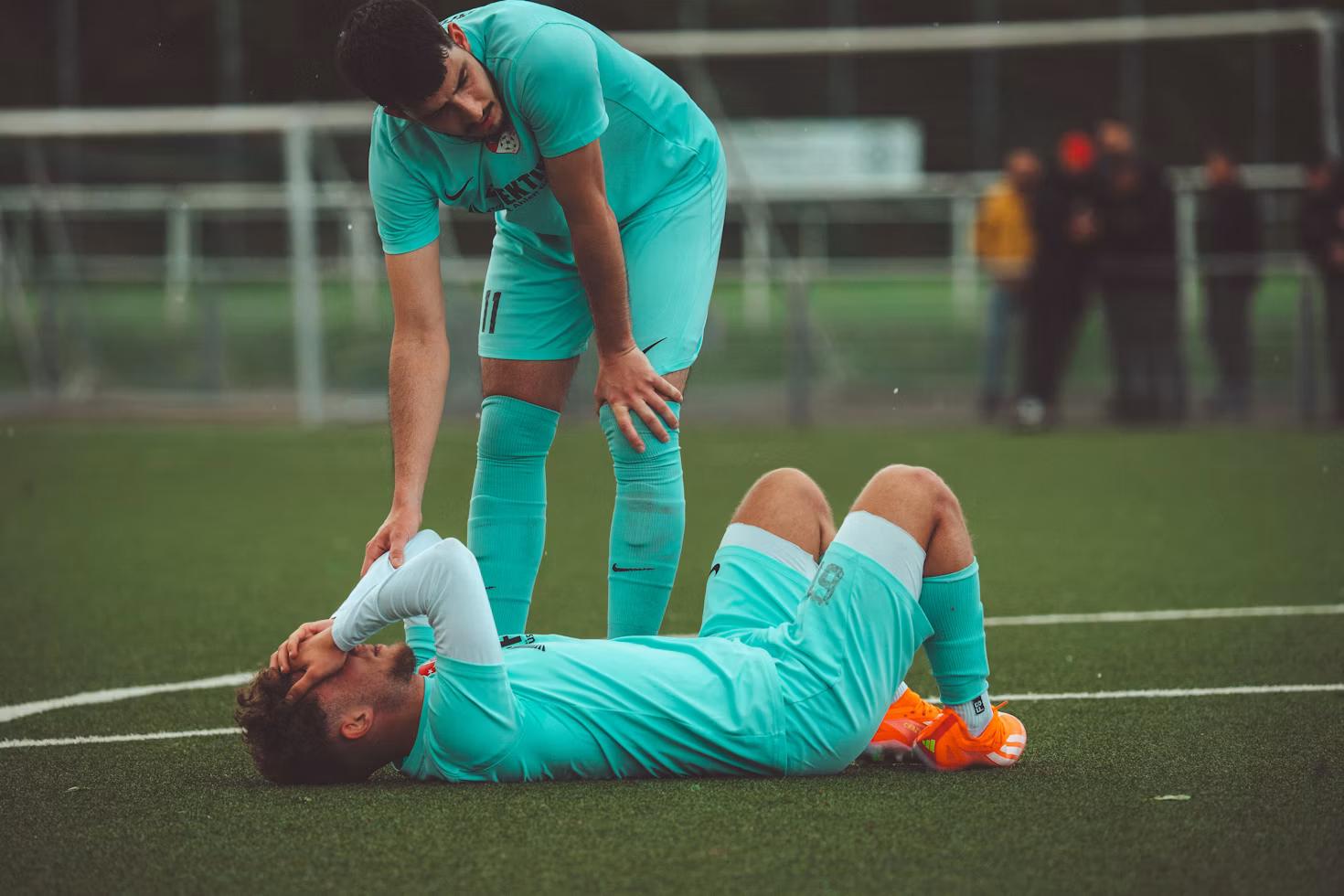
Daley Blind can play centre-back, left-back, right-back, and central midfield — competently, sometimes very well, for club and country, across more than a decade at the top level. Arjen Robben could play right wing. That's it. Everyone on the pitch knew exactly what he was going to do — cut inside onto his left foot, curl it into the far corner — and for the better part of fifteen years, nobody could stop him anyway.
Ask a casual fan to name the better player and Robben wins in a landslide. Ballon d'Or shortlists, Champions League final goals, a permanent place in Bayern and Netherlands folklore. Blind, meanwhile, is remembered — when he's remembered — as a "solid squad player." Reliable. Versatile. Underwhelming as a compliment.
But ask a manager which one they'd rather have when three players are injured and a system needs rebuilding overnight, and the answer isn't obvious anymore.
Why the Adaptable Player Disappears From Memory
This isn't really a football problem. It's a visibility problem.
Specialism produces moments. A Robben goal is a discrete, clippable, repeatable event — same movement, same outcome, instantly legible even to someone who doesn't understand the game. Generalism produces absences — the crisis that didn't happen because someone filled a gap, the system that didn't collapse because one player could slot into three different roles without the team missing a beat. Nobody makes a highlight reel out of a problem that never occurred.
This is a fairly direct case of what psychologists call the availability heuristic — we judge value by what's easy to recall, and specialist brilliance is engineered to be recalled, while generalist reliability is engineered to be invisible. Blind's value shows up in what didn't go wrong. Robben's value shows up in what obviously, spectacularly did go right. One of those is a story. The other is a non-event that happens to be the reason the story was possible.
Fernandinho at Manchester City is maybe the purest version of this. Guardiola trusted him at right-back, in a back three, and in defensive midfield — often in the same season — while David Silva and Kevin De Bruyne received the individual awards. Nobody was writing thinkpieces about Fernandinho's technique. Everybody in that dressing room knew exactly what he was worth.
What This Looks Like Off the Pitch
The same asymmetry runs through most careers.
A specialist — the person who owns one narrow, deep skill — becomes extremely valuable while that skill stays in demand, and highly visible while they're using it: "I built X," "I'm the person for Y." That's a legible, promotable contribution. It fits neatly on a résumé line and in a performance review.
A generalist's contribution is structurally harder to describe. "I made the team function." "I filled the gap nobody had a plan for." "I picked up the project no one else had time to properly own." True, and almost impossible to put a number on — which is exactly why generalists get passed over for the promotion that goes to the person with the flashier, more legible specialism, even when everyone privately knows who actually keeps things running.
Where the generalist quietly wins is in what happens when the ground shifts. A hyper-specialist whose narrow skill becomes less relevant — the tool gets replaced, the team gets restructured, the industry moves — has to start close to zero somewhere new, because their entire value was built on depth in one place. A generalist has already spent years practising the one skill that actually transfers: getting reasonably competent in an unfamiliar domain, fast. For them, a pivot isn't really a pivot. It's Tuesday.
The Team Needs Both. The Individual Should Probably Bet on One.
None of this makes specialism a mistake. A team of nothing but Blinds has no one who can win a match on their own in a moment that requires exactly one specific, elite skill. A team of nothing but Robbens has no adaptability left the moment the plan stops working. Every functioning squad — and every functioning organisation — needs a foundation of generalists holding the structure together, with a smaller number of specialists positioned to win the moments that require real depth.
But if you're the one making the career bet, not the one assembling the roster, the calculation is different. Specialism pays better in the short run and looks better on the way up. Generalism is the harder sell, the slower recognition, the "solid, reliable" compliment that never quite feels like enough.
It's also, on the evidence, the bet that survives contact with change.
Nobody can fully explain how football intelligence is built. Not the players who have it, not the scouts who hunt for it, not the clubs paying millions for it. Ask a great player why he moved before the pass and the honest answer is usually "I just knew."
That gap, between knowing and being able to say, is the real subject here. It's why ten thousand hours is only the price of admission.
The Spectrum
A player's intelligence isn't a single thing. It's a journey from the most automatic to the most conscious, from body to mind, built across years.
At one end is muscle memory: the body executing without the brain's involvement. Ronaldo's free kick run-up. Xabi Alonso's passing technique. Thousands of identical rehearsals until the movement runs itself.
Next is instinct: faster than thought, but reading the situation first. Manuel Neuer is already moving off his line before the decision registers.
Then pattern recognition, where most elite football intelligence lives. Paolo Maldini barely tackled in his career because he was always in the right place before the tackle was needed. His most famous line: "if I have to make a tackle, I have already made a mistake." Kanté reads where the ball will be before it gets there. The player who has it can't always explain it. It just feels obvious.
Above that is intuition: knowing without reasoning. Xavi's positioning was never calculated. It was felt. Pirlo always knew where to be and never seemed to hurry.
Then tacit knowledge. Zidane the player could do extraordinary things and struggled to explain them. He knew more than he could say.
And at the far end, the rarest point: the epiphany. The moment what was unconscious becomes something the mind can articulate and teach. Guardiola has it: positional play, the half-space, the pressing triggers, all explained and transferable. Zidane the manager seemed to find in the dugout the language he never had as a player.
This also explains an old puzzle: why great players rarely become great managers. Players live on the left of the spectrum, where knowledge is real but hard to put into words. Managers need to have moved right. Ferguson's genius was largely instinctive, which is why so much of it left with him.
What the Hours Actually Build
Gladwell's ten thousand hours, drawn from Anders Ericsson's research, is often read as a guarantee. It isn't. Ericsson found that expertise needs deliberate practice: at the edge of your ability, with feedback, in conditions that force you to adapt. Ten thousand hours of the same thing in the same conditions gives you muscle memory. Ten thousand hours in variable, unpredictable conditions gives you perceptual learning: a long-term change in how you see, and eventually intuition.
Football is the ideal place for this, almost by accident. No two matches are identical. No two opponents press the same way. Contextual interference theory says skills learned in variable conditions transfer better than those learned in controlled ones, which is why a player raised on chaos can read a new system faster. The variability wasn't the obstacle. It was the education.
Where the Algorithm Stops
I work with data wrangling and data modelling for a living, and I play at centre-back. They've taught me the same lesson from opposite ends.
Right now "AI" is on every slide. Teams and companies say it because everyone else does, and a lot of what gets the label is plain analytics: a regression, a dashboard, a model with a better name. People assume it will replace anything, literally anything. What they rarely consider is how much of expertise is knowledge nobody can write down. Michael Polanyi put it as "we can know more than we can tell," and the economist David Autor argues it's why automation has struggled with work that needs judgment and adaptability: you can't program a rule you can't state. The roboticist Hans Moravec saw the flip side in the 1980s. Reasoning is the easy part for machines. The perception and movement a one-year-old manages is the hard part.
The real machine learning is genuinely impressive, though. In recorded data it is extraordinary. Feed it enough data and it finds the pressing triggers that produce turnovers, the shapes that concede the fewest expected goals, the passing sequences that create the best chances, faster and more consistently than any analyst.
But it recognises patterns without understanding them. It can tell you what happens, not why it matters, and it knows only what its data has shown it. A player with ten thousand hours hasn't just processed data. The game has changed them. They've become someone who sees it differently, with a body and a perceptual system that experience can reshape. As far as I can see, no model has that, not yet and not in the same way.
The Price of Admission
None of this is unique to football. The surgeon whose hands know before the mind does. The teacher who reads a classroom in thirty seconds. The negotiator who senses the moment the other side is about to concede. Same spectrum, same road: repetition in variable conditions until perception itself changes.
And the ones who became truly exceptional, the ones who could teach and not just do, eventually had the epiphany. The moment the body's knowledge finally reached the mind.
Ten thousand hours is not the destination. It is the price of admission. What happens at the end of them, whether the knowledge stays in the body or reaches the mind, is what separates the great players from the great coaches, the people who can do from the people who can explain.
Football intelligence is what ten thousand hours looks like.
No algorithm has ten thousand hours. Not really. It has data. The difference is everything.
misterillahi•Oct 25, 2026 The ball drops near my box, an opponent picks it up, and before I've thought anything, my body has already moved.
That's the instinct, and it took me years to learn how often it's wrong. I used to be a forward, so I know what a dangerous run feels like before it starts. It's the only reason I'm any good at stopping them.
I moved back because I enjoyed reading the game more than finishing it. That, and the older I get, the more weight I gain. Since then I've spent years learning which of those moments are real.
Last week I wrote about reading the room: the defender who fills the gap before it opens. This is the other half. Once you can see everything, you still have to decide what actually matters.
Everyone starts out treating all of it as danger. You close the gap. You commit. You react to the fact that someone is there, rather than to what they're actually capable of doing with it. It feels like vigilance. Most of the time it's just noise dressed up as alertness.
The Instinct Isn't Distrust
Watch a back line long enough and most defenders look like they have trust issues. The moment danger shows up anywhere near the team, they react. I'm one of them. On the pitch I'm the loudest voice on my team: "man on", "time", "on your left", "get back", "focus". It could look like I don't trust the people around me. It's the opposite. Every call is me handing over what I can see so they can act on it.
From the stands, a defender who steps across to cover looks like he's saying "I don't think my fullback can handle this." He isn't. He's reacting to the presence of danger itself. Anticipating danger is the whole job, so the reaction is wired in. It fires at the threat, not at the quality of the person standing next to him.
That distinction matters, because it changes how you judge the instinct. The reaction isn't the flaw. It's what makes someone a defender in the first place. The real question is what happens in the half-second after it fires.
Not All Threats Are Threats
A good central defender spends their career learning to tell an opponent who is dangerous from an opponent who is merely present. This is called threat discrimination in performance psychology: correctly separating genuine danger from background noise, instead of reacting to everything with the same intensity.
Take a one-on-one with the goalkeeper. If the player running through is a centre-back who has wandered forward, that's usually the keeper's problem, and a calm one. (Usually. I've been that centre-back.) Nobody behind him needs to sprint back in a panic. Put a deadly striker in the exact same picture and everything changes: you recover, you cut the angle, you do whatever it takes to get there. The shape on the pitch is identical. The danger isn't.
Where does a threat actually start? Not at distance. Plenty of opponents stand right next to me and nothing happens. The line is whether you trust someone just to be near, or whether they might do something from there. For me, the tell is the eyes. A harmless one watches the ball. A dangerous one is looking past it, at the space, the gap, whatever's left unguarded. And everyone draws that line in a different place. Two defenders can share a back line and still mark at different distances. The shape only holds when each knows where the other one's line is.
Defenders who never develop this skill are easy to spot: constantly lunging, constantly stepping out of the line, treating every touch near them as a five-alarm fire. They're not more alert than everyone else. The panic is filling the gap where the judgment should be.
Trusting the Shape
Reading danger correctly is only half of it. The other half is trusting that you don't have to solve every problem on the pitch yourself.
A centre-back who reads the game well still has to resist a second instinct, subtler and harder to unlearn: the urge to cover everything. To drop deeper than you need to because you don't fully trust the midfielder screening in front of you. To check, again, a problem someone else already has. You've correctly identified there's no real danger yet. What's left is the urge to check anyway.
A back four doesn't work if one defender is quietly trying to defend all four positions at once. The system depends on a specific discipline: stay in your position, trust the player next to you to stay in theirs, and reserve your full attention for the moments that actually demand it. In that one-on-one, the keeper is the person you're trusting.
What This Looks Like Off the Pitch
This translates almost exactly to jealousy, and it's rarely framed this way.
When someone feels jealous, angry or frustrated, the usual assumption is that they don't trust the other person. Often that isn't it. The trust can be completely intact. What's reacting is the instinct, the same wired-in one as the defender's, firing at the danger around someone who matters to them: someone's attention, a new face in their circle, a pair of eyes looking for an opportunity, someone who seems to want something more. The feeling is about the presence of the danger, not a verdict on the person.
That makes the feeling normal. It doesn't make every situation a threat. Someone you care about talking to someone else isn't automatically a striker through on goal. Most of the time it's a centre-back wandering forward: a touch of the ball near the box that doesn't need anyone to lunge.
So the work comes after the instinct fires. It's reading which moments are genuinely significant, and then, for everything else, trusting the person you care about to hold their own position, without stepping out of yours to go check.
This isn't only one person's job. A defender can shout "man on" all day, but it only works if someone answers. "Got him." "Yours." The call and the answer are the whole system. Off the pitch it's the same. The one who feels the danger has to say it honestly, without accusing. The one being looked out for has to hear it and feel it first, before explaining why it's fine. Reasons come second. And sometimes protecting that feeling costs someone else a little comfort. Pay that knowingly, and look for the version that costs the least. How you answer is how the other person finds out the shape is holding.
It's harder than it sounds, because the two kinds of vigilance feel identical from the inside. Panicking at every touch and reading the game well both look, in the moment, like paying attention. The difference only shows over time: one version exhausts everyone involved, including the person doing it. The other lets the whole shape hold.
The Last Line Isn't Supposed to Move for Everything
The best defending is mostly invisible. Nobody writes about the tackle that didn't happen because the defender read the pass early and stayed where he was. Nobody notices the bond where nothing dramatic ever occurs, because neither person is spending energy checking the other for danger that was never there.
I can tell which runs matter because I used to make them. These days I'm slower than I was, so I read earlier, much earlier than I need to react. And the older I get, the less I react to what doesn't matter, because age adds knowledge and experience. Age doesn't make you faster. It makes you earlier.
Danger rarely announces itself. It arrives looking like nothing, and the only way to catch it is to know the difference between nothing and something.
I can shout all day, but without an answer I'm just a loud man alone at the back.
Not everyone who comes near is a threat. Learn which ones are. Shout when it matters. Hold your line when it doesn't. And trust the ones who shout back.
misterillahi•Oct 18, 2026 There is a specific feeling that arrives a half-second before anyone else in the room notices anything has changed. Not a thought. Not a conclusion you could defend if someone asked you to explain it. Just a shift — in the air, in the spacing between people, in the rhythm of a conversation that was moving one way and is now, almost imperceptibly, moving another.
Some people get this on a football pitch. Some people get this in a meeting room. A smaller number get it in both, and spend a fair amount of time wondering whether it is actually the same skill wearing two different shirts.
It is. And once you start looking for it, the mechanism behind it turns out to be one of the more well-studied and least appreciated forms of intelligence there is.
The Defender Who Fills the Gap Before It Opens
Play enough football as a central defender and a particular instinct starts to form, usually without anyone teaching it directly. The team in front of you gets disorganised — a midfielder caught upfield, a full-back dragged out of position, the shape stretched by a counter nobody quite tracked — and before the danger has fully arrived, you are already moving to cover it. Not reacting to the pass that is about to be played. Reacting to the disorganisation itself, the structural gap that the danger has not yet found but will.
This is not the same skill as reading the ball. Reading the ball is anticipation of an object's trajectory — useful, learnable, mechanical in a way that can be drilled. What is being described here is something a level up: reading the shape of a situation, sensing that a system has become unstable before any single visible event proves it. The cover is not a response to what is happening. It is a response to what the current configuration makes likely to happen next.
The strange part is how little of this is conscious in the moment. You do not run through a checklist — full-back is high, midfielder is turned the wrong way, therefore the half-space is exposed. You just feel the wrongness of the picture and your body starts closing the gap before the analysis would have finished running. Ask afterwards why you made the read and the honest answer is usually some version of it just felt off. That is not an unsatisfying answer. It is the correct one. The read happened beneath the level where language operates.
The Same Read, Wearing a Different Shirt
The peculiar thing about this skill is that it does not stay on the pitch. Sit in enough meetings, manage enough projects, navigate enough office politics, and the same sensation starts showing up in rooms with no ball in sight.
A meeting is going fine, and then it is not, and the shift happens a full minute before anyone says the sentence that makes it obvious. Someone's tone flattens slightly. A question that would normally get an enthusiastic answer gets a careful one instead. Two people who usually address comments to the room start addressing them to each other. None of this is information, exactly — nobody has said anything that would hold up as evidence. But the shape of the room has changed, the same way a back four's shape changes the instant one player drifts five yards too far forward, and the people who can feel that shift are already adjusting before the people who cannot have noticed anything happened at all.
This is, structurally, the exact same instinct as filling the defensive gap. Not reading the explicit content of what is said. Reading the configuration — who is positioned where, emotionally and conversationally, and what that configuration is making more or less likely to happen next. The colleague who senses a decision is about to go badly before the room has voted on it is doing the corporate version of stepping across to cover a winger nobody else has tracked yet.
What the Science Actually Calls This
Psychologist Malcolm Gladwell popularised a term for this in Blink: thin-slicing — the brain's capacity to find patterns in situations based on very narrow windows of experience, often producing judgments that are not just fast but more accurate than the slower, fully-reasoned alternative. The phrase captures something real: experienced perceivers are not processing less information than careful, deliberate thinkers. They are processing a condensed version of it, filtered through thousands of prior exposures to similar configurations, so that the relevant signal surfaces almost instantly and the irrelevant noise never even reaches conscious attention.
This sits on top of perceptual learning — the well-documented finding that extended exposure to a complex, variable environment reshapes what a person is capable of noticing, not just what they know. A defender who has spent a decade reading disorganised back lines has not just memorised situations. Their perceptual system has been recalibrated to register instability as a category, the way a sommelier's palate gets recalibrated to register specific notes a novice's mouth simply cannot detect yet. The same recalibration happens to anyone who spends years paying close attention to how rooms full of people behave under pressure, ambiguity, or change.
What both domains share is the underlying training condition: high-stakes, time-pressured, socially or spatially complex environments, repeated often enough that the brain stops needing to consciously search for the pattern and starts simply recognising it on arrival. Football trains this through repetition under a literal clock. Office life trains it through repetition under a quieter, slower-moving clock — but the clock is still there, and the read is still the same shape.
The Cost Nobody Mentions
There is a less flattering side to this that is worth being honest about, because it is the part most articles about "reading the room" tend to skip.
Thin-slicing is fast precisely because it is not deliberative — which means it is also occasionally wrong in ways that feel exactly as confident as the times it is right. The defender who reads a phantom danger and steps across unnecessarily has just vacated a space that was, in fact, fine. The employee who reads tension into a room that was simply tired, or quiet for reasons that had nothing to do with what they assumed, has just made a social move — a cautious comment, a defensive posture, a withheld idea — based on a signal that was never really there. The same mechanism that produces brilliant anticipatory reads produces false positives with identical conviction. There is no internal alarm that distinguishes a correct thin-slice from an incorrect one. Both arrive feeling exactly the same: certain, immediate, and entirely pre-verbal.
This is worth sitting with if reading the room is something you are good at, because the skill's biggest blind spot is that it does not announce its own failure rate. You only find out you misread the moment after you have already acted on it — closed the gap that did not need closing, gone quiet in a meeting that needed your voice, assumed hostility in a silence that was actually just someone choosing their words. The instinct is genuinely valuable. It is not infallible, and the people best at using it tend to be the ones who have also learned, the hard way, when to override it.
Why the Overlap Is Not a Coincidence
It is tempting to treat the football read and the corporate read as a charming parallel — two unrelated skills that happen to resemble each other if you squint. The more accurate description is that they are the same cognitive faculty, trained in two different arenas, both of which reward the same underlying capacity: noticing structural change before it becomes explicit content.
A football pitch and a meeting room have almost nothing in common on the surface. Underneath, they are both environments where a stable configuration can shift into an unstable one faster than anyone can articulate, where the people who survive and the people who get caught out are often separated by nothing more than how early they noticed the shape had already changed. The defender filling the gap and the colleague who feels a decision turning bad are not doing two different things that happen to look alike. They are doing the same thing, in different rooms, for the same underlying reason — because somewhere along the way, each environment trained them to feel the shift before they could have explained it.
misterillahi•Oct 11, 2026