There is a character in The Big Bang Theory who does not have a PhD. She cannot explain quantum mechanics or argue about which superhero would win in a fight. She does not have the most memorable lines or the most dramatic storyline.
But remove Penny from that group and the show stops making sense. The brilliant, socially dysfunctional scientists lose their connection to the real world. The dynamic that makes the show function — the balance between intellect and humanity, between the theoretical and the actual — quietly collapses. Nobody writes episode reviews about Penny's contribution. The show does not work without it.
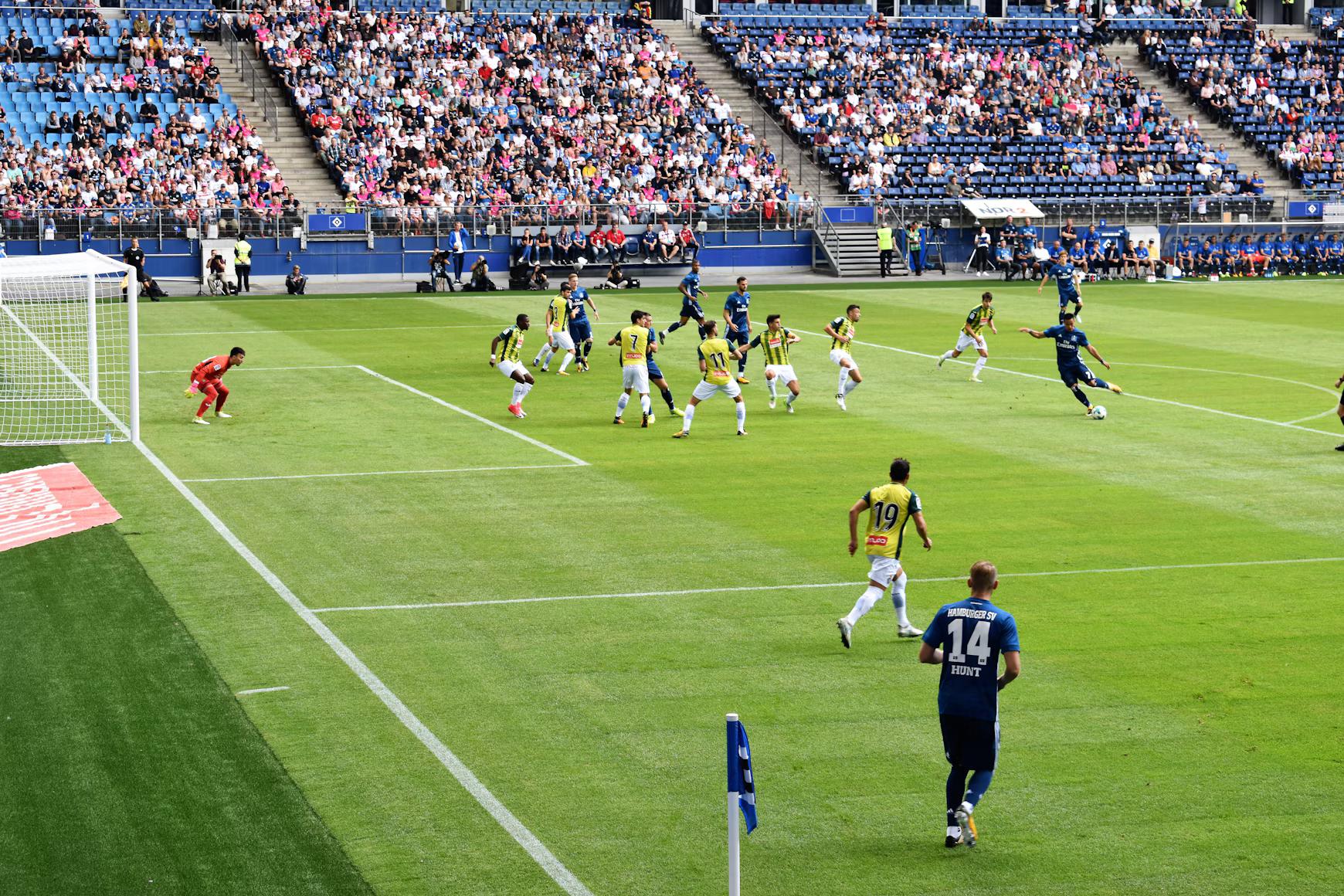
Football has a Penny. They play in the middle, slightly deeper than everyone else, and the game they produce looks — to most observers — like very little. They receive the ball and give it simply. They move into spaces before anyone has asked them to. They intercept passes that were not supposed to be dangerous. They make football look slightly boring when they are playing well.
They are the reason the team works. Almost nobody knows it while it is happening.
What They Actually Do
The deep lying playmaker — the holding midfielder, the pivot, the regista — is the position football finds hardest to appreciate, because their excellence shows up as the absence of problems rather than the presence of solutions.
Goals are visible. Assists are visible. A dribble past three defenders is visible. The midfielder who read the space two seconds before anyone else and moved into it, making the threat disappear before it had a name, produces nothing visible. The threat never materialised. The statistic does not exist. The highlight reel has nothing to show.
This is the counterfactual problem applied to a position. You can measure what happened. You cannot easily measure what was prevented, and the deep lying playmaker's entire contribution lives in the second category.
Sergio Busquets played 722 matches for Barcelona. He won nine La Liga titles and three Champions Leagues, then a World Cup and a European Championship with Spain. He was the axis on which Barcelona's possession system rotated — the player through whom almost every attack was built, the one who made space for the creators around him, the safety valve Messi could always find when a move broke down. Vicente Del Bosque, who coached him at Spain, put it this way: "You watch the game, you do not see Busquets. You watch Busquets, you see the whole game."
And yet Busquets spent his entire career in the shadow of the players around him. Not because he was lesser — because his contribution was structural rather than spectacular. He was the reason the system worked, not the system working.
The Data Cannot See Them
The metrics football uses to assign value are almost entirely oriented toward creation and completion. Goals. Assists. Key passes. Chances created. Progressive carries. All of them measure what a player added.
The deep lying playmaker's most important contributions are subtractive. They remove danger before it becomes danger. They intercept before the pass is made. They make a simple five-yard pass that keeps possession at a moment when losing it would have been catastrophic — and on the stat sheet it looks identical to a five-yard pass made under no pressure at all.
In 2020-21, Busquets completed 91.2% of his passes. That looks impressive. It does not begin to capture what he contributed. A passing percentage says nothing about when the passes were made, what pressure he was under, or what would have happened if one had been intercepted. The number exists. The context does not survive into the statistic.
Michael Carrick played for Manchester United for twelve years. His teammate Rio Ferdinand called him "the most underrated and undervalued player in the league." When Carrick played well, United controlled games — possession was maintained, tempo was managed, the opposition never found a foothold.
The people who played alongside him knew what he was worth. Outside the dressing room, he was rarely the name anyone put first. The gap between those two assessments is the recognition problem in its clearest form.
The Number That Does Not Exist
Here is the argument the data eventually started making, even if it took a long time to be heard.
The pivot's individual statistics are underwhelming by design. But when analysts began looking at team-level data — possession, defensive transitions, press resistance, expected goals against — the picture changed entirely. The individual datapoints were minimal. The team uplift was enormous and systematic.
Call it complementarity: some players' value is expressed through the uplift they give their teammates, not through their own direct contributions. The pivot does not generate the data. They generate the conditions under which everyone else's data improves. Busquets did not create the chances. He created the platform on which chances could be created. Rodri does not score the goals. He controls the tempo that makes scoring possible.
City's results tell the story. Since Rodri's Premier League debut in 2019, they lost 7 of 21 league games without him, about a third, and their win rate was over 12 percentage points lower (Opta Analyst, September 2024). The squad around him did not change: one of the greatest teams of the Premier League era. The player the statistics described most blandly was the one whose absence cost the most.
The great dribblers and goalscorers make moments that live forever on highlight reels. Their contributions announce themselves loudly enough that nobody needs to look for them. The pivot's only becomes visible when you look at what the team does differently with them on the pitch — which is why recognition arrives late, if at all, and why Rodri's 2024 Ballon d'Or, rarely given to a holding midfielder, felt like the football world finally stopping to say something that had always been true.
Why Every Great Team Has One
The evidence is not subtle.
Barcelona's tiki-taka era — the most complete expression of possession football the game has produced — was built around Busquets. Not Messi. Not Xavi. Busquets. Without him, the high defensive line was exposed. Without him, the pressing triggers had no anchor. Without him, the ball circulation that made Barcelona look inevitable became the ball circulation that left spaces.
This pattern repeats across eras. France's 1998 World Cup winning team had Didier Deschamps, whom Eric Cantona dismissed as a "water carrier." Deschamps, as captain, lifted the trophy. Cantona was not even in the squad. Deschamps later said: "I was a water carrier, I don't reject my image."
The water-carrier, it turned out, was the one holding everything together.
The Reading Nobody Can Teach
If you have ever played football seriously, your appreciation of this player comes from playing alongside one.
The deep lying playmaker reads the game at a speed that is hard to articulate and impossible to fully measure. They see the space that is about to open before the movement that will create it has happened — not through supernatural intuition but through thousands of hours of pattern recognition operating below conscious thought. Psychologists call it perceptual learning. It is why the impact is huge and the datapoints are minimal. The datapoint for a good reading of the game is the thing that did not happen.
The One Nobody Sees
You notice them most clearly in their absence. When Rodri was injured, City lost a third of their league games without him. The same question follows Busquets at Barcelona and Carrick at United: what did the team look like on the days they were not there?
The measure of their contribution is the difference between the team with them and the team without them. That difference is enormous. It is also, by the nature of how we process football, almost invisible while it is happening.
Busquets made Barcelona work. Carrick made United work. Rodri makes City work. Just as Penny makes the show work — not through the most memorable lines or the most dramatic moments, but through the quiet, structural presence that holds everything else together.
A team without this player struggles to control games at elite level in ways that are hard to fix with talent elsewhere.
They are the one nobody sees.
The game sees them. Eventually, so does everyone else.
In 2016, Como went bankrupt and restarted in Serie D, the fourth tier of Italian football. In October 2026 they beat Manchester United 4-1 in the Champions League. Two weeks later they won 9-1 away at Lens.
Between those two sentences, the club did not discover a secret metric. It did something harder: it got a president and a coach to disagree in a useful way.
The Analyst's Real Job
I manage data analysts, and the part of the job nobody warns you about is that the analysis is the easy half. The hard half is the room. A finding that nobody acts on is a spreadsheet.
Football makes this obvious. The manager has spent twenty years learning to trust what he sees. The analyst arrives with a number that says otherwise. If the number wins by default, you get a club that signs spreadsheets. If the manager wins by default, you get a club that never needed an analyst. Both are failures. The interesting question is what a club does in between.
What Como Does in Between
Como's president, Mirwan Suwarso, came from advertising and broadcasting, not football. He has described a process that treats the disagreement as information rather than a problem to settle.
Before each match, Cesc Fàbregas writes a game plan and submits it to the board, roughly a day ahead. The data team separately builds its own prediction of how the match should go. After the game, the club compares three things: the plan, the prediction and what happened.
That changes what a result means. Suwarso gave an example on a podcast: against a team sitting in a low block, the data might expect Como to create around 0.8 to 0.9 expected goals. If they reach 1.3 and still draw 0-0, "we did better than we were supposed to do." He has also described the win over Juventus as a ten-out-of-ten performance against the intended plan.
The score is only one input. The question the club asks is: did we do what we said we would do?
When the Data Said No
The more revealing story is recruitment. Suwarso has said that for some players the club's data said the player wasn't good enough, and Fàbregas disagreed. His argument was that the numbers reflected the role the player had been given, not his ability.
The example Suwarso gives is Lucas Da Cunha, a winger whom Fàbregas moved into central midfield. Como had signed him from Nice for a modest fee, reportedly under half a million euros. Suwarso calls him "Fabregas's invention," and says many clubs are now interested.
Read that carefully, because the lesson is not "the coach beats the data." Fàbregas did not ignore the numbers. He explained them. The data described what the player had done in one role. Fàbregas was making a claim about what he would do in another. The model was answering a question about the past, and the coach was answering a question about the future.
That is the analyst's blind spot, and mine. A model only knows what its data has shown it. The person on the touchline can imagine a version of the player the data has never seen.
Da Cunha is now Como's captain, at a club that was in Serie D ten years ago.
It cuts the other way too. Suwarso says signings need majority agreement and that Fàbregas's voice is the most influential, but not the only one. He has described a winger, Jayden Addai, whom Fàbregas was unsure about before trusting the group's view. The coach is not always right, and the structure allows for that.
The Part That Isn't Data
Suwarso has said Como's player valuations rose from €60 million to €389 million in two seasons. A club that finishes fourth in Serie A and reaches the Champions League for the first time is clearly doing something right.
But the useful thing to notice is how the club is built, not the headline. Suwarso says that signing a player the coach won't use has little value. So the president, the data team and the coach are not three departments sending reports to each other. By Suwarso's account, they share the data with each other and argue about it.
That alignment is the whole story, and the president is the one holding it together.
A Caution
Almost everything we know about this process comes from Suwarso himself, in interviews and podcasts, and none of it has been independently checked. Como is also funded by wealthy owners, so a good process is only part of the story.
So I would not say Como proved that data plus intuition wins. I would say they built a process where neither is allowed to win by default, and that is rarer than any single metric.
The Number Never Decides
When I think about what makes a good analyst, it isn't the model. It is the willingness to say "here is what the data shows, here is what it cannot see, and here is who has to decide."
Como's version of that is a coach who writes down his plan before the match, a data team that writes down its prediction, and a president who reads both.
The number never decides. Someone still has to. The analyst's job is to make that someone better at it.
Daley Blind can play centre-back, left-back, right-back, and central midfield — competently, sometimes very well, for club and country, across more than a decade at the top level. Arjen Robben could play right wing. That's it. Everyone on the pitch knew exactly what he was going to do — cut inside onto his left foot, curl it into the far corner — and for the better part of fifteen years, nobody could stop him anyway.
Ask a casual fan to name the better player and Robben wins in a landslide. Ballon d'Or shortlists, Champions League final goals, a permanent place in Bayern and Netherlands folklore. Blind, meanwhile, is remembered — when he's remembered — as a "solid squad player." Reliable. Versatile. Underwhelming as a compliment.
But ask a manager which one they'd rather have when three players are injured and a system needs rebuilding overnight, and the answer isn't obvious anymore.
Why the Adaptable Player Disappears From Memory
This isn't really a football problem. It's a visibility problem.
Specialism produces moments. A Robben goal is a discrete, clippable, repeatable event — same movement, same outcome, instantly legible even to someone who doesn't understand the game. Generalism produces absences — the crisis that didn't happen because someone filled a gap, the system that didn't collapse because one player could slot into three different roles without the team missing a beat. Nobody makes a highlight reel out of a problem that never occurred.
This is a fairly direct case of what psychologists call the availability heuristic — we judge value by what's easy to recall, and specialist brilliance is engineered to be recalled, while generalist reliability is engineered to be invisible. Blind's value shows up in what didn't go wrong. Robben's value shows up in what obviously, spectacularly did go right. One of those is a story. The other is a non-event that happens to be the reason the story was possible.
Fernandinho at Manchester City is maybe the purest version of this. Guardiola trusted him at right-back, in a back three, and in defensive midfield — often in the same season — while David Silva and Kevin De Bruyne received the individual awards. Nobody was writing thinkpieces about Fernandinho's technique. Everybody in that dressing room knew exactly what he was worth.
What This Looks Like Off the Pitch
The same asymmetry runs through most careers.
A specialist — the person who owns one narrow, deep skill — becomes extremely valuable while that skill stays in demand, and highly visible while they're using it: "I built X," "I'm the person for Y." That's a legible, promotable contribution. It fits neatly on a résumé line and in a performance review.
A generalist's contribution is structurally harder to describe. "I made the team function." "I filled the gap nobody had a plan for." "I picked up the project no one else had time to properly own." True, and almost impossible to put a number on — which is exactly why generalists get passed over for the promotion that goes to the person with the flashier, more legible specialism, even when everyone privately knows who actually keeps things running.
Where the generalist quietly wins is in what happens when the ground shifts. A hyper-specialist whose narrow skill becomes less relevant — the tool gets replaced, the team gets restructured, the industry moves — has to start close to zero somewhere new, because their entire value was built on depth in one place. A generalist has already spent years practising the one skill that actually transfers: getting reasonably competent in an unfamiliar domain, fast. For them, a pivot isn't really a pivot. It's Tuesday.
The Team Needs Both. The Individual Should Probably Bet on One.
None of this makes specialism a mistake. A team of nothing but Blinds has no one who can win a match on their own in a moment that requires exactly one specific, elite skill. A team of nothing but Robbens has no adaptability left the moment the plan stops working. Every functioning squad — and every functioning organisation — needs a foundation of generalists holding the structure together, with a smaller number of specialists positioned to win the moments that require real depth.
But if you're the one making the career bet, not the one assembling the roster, the calculation is different. Specialism pays better in the short run and looks better on the way up. Generalism is the harder sell, the slower recognition, the "solid, reliable" compliment that never quite feels like enough.
It's also, on the evidence, the bet that survives contact with change.
I’m a software engineer. I do vibe code.
I’ve been writing software for a long time, long enough that reading code is more natural to me than reading prose. And somewhere in the last year I became a vibe coder. I describe what I want, the AI writes it, the tests pass, I ship. It’s fast, it’s fun, and I’m not going back.
But there’s an old habit I can’t shake, and I don’t think I should. I want to know how it works. Not every line; I gave that up happily. But when a user hits “place order,” I want to know what runs, in what order, where the retry lives, and whether the AI quietly went around a layer I care about. For years that knowledge came for free, because I was the one typing. Now I ship things I could not draw on a whiteboard, and that bugs me.
Vibe coding isn’t broken; it’s doing what it promised. It’s result-oriented. I judge the output, the AI optimizes for the output, and the path in between becomes something nobody looks at. I just happen to be the kind of engineer who still wants to look. And a normal code diff doesn’t help me there: it shows which lines moved, not what the app does differently.
There’s a newer wave of tools that hand the AI (and you) a map of the codebase instead of a pile of files. Graphify and CodeGraph are the big names. They build a graph of what connects to what, and they’re great at it. But a graph tells you that A talks to B. It doesn’t tell you when, in what order, or only-if-something-failed.
So, inspired by Graphify, I built VibeSequence. Where Graphify maps your codebase as a knowledge graph, VibeSequence maps it as a list of user sequence diagrams, one for each thing a user can do. It adds the part a graph leaves out: the order of calls, drawn as a sequence that both you and your AI can read. This post is about why I wanted it and how I use it to get the process back without giving up the speed.
A quick demo of VibeSequence: building the diagrams from a codebase, zooming into one flow, and playing it step by step.
What VibeSequence actually does
You point it at a project (vibesequence build .), it reads the code without running anything, finds the entry points (web routes, CLI commands, that kind of thing), and draws each one as a flow you can zoom in and out of. Zoomed out you see which parts of the app talk to each other. Zoomed in you see individual functions. I didn’t set out to replace a graph; I set out to add the thing a graph can’t show, which is order, and the branches around each step.
Three things make it useful when an AI is doing the typing:
Play mode. Step through a flow one arrow at a time, each pointing at the exact file and line. It’s like a debugger, except you’re reading instead of running.
Live diff. While the AI edits, the steps that changed turn green, and you can play just those. So code review stops being “which lines changed” and becomes “what does the app do differently now.”
A text version for the AI. The same diagram comes out as a compact text tree, so the AI can read one flow instead of opening eight files. There’s also a “who calls this?” command that tells you which user-facing flows would break if you changed something.
Fair warning: it’s tiny and young. Sixteen stars, one maintainer (me), Python and JavaScript/TypeScript only. I ran a small test with Claude Code and I’ll be honest about the numbers: when the AI had to understand a flow, it used about a quarter fewer tokens and finished in half the turns. For small edits it actually cost a bit more, because the AI still has to read the files it changes. Go, Java and a few other things are on my roadmap, not shipped yet. There’s a one-line install that teaches Claude Code to check the flows on its own after each edit.
All of that is from the project README as of today.
My loop: vibe code, then look at the sequence
Here’s the routine. It adds maybe two minutes a session, and it plays fine alongside a graph tool if you already use one: the graph helps the AI find code, the sequence shows you what it did.
Snapshot before. Build the diagrams before the AI touches anything. That’s the shape you want to keep.
Vibe code. Paste an existing flow into the prompt if you want the new one to follow it. Leave the viewer open; changed steps turn green on their own.
Diff the sequence after. Rebuild, play the green steps, and ask: did anything skip a layer, grow sideways, or lose a step it needed? If not, ship.
Step 3 is the one I never skip. Steps 1 and 2 I scale with how much the session could bend the shape; for a one-line fix the map barely helps, and my own numbers say so.
Wrapping up
Wanting to understand your own system doesn’t make you a dinosaur. It’s the part of being an engineer I want to keep while the AI does the typing. “It works” only describes the result, and I’ve watched the result stay green while the process underneath quietly went wrong. A sequence diagram that redraws itself after every AI edit is the closest thing I’ve found to seeing the process without giving up the speed. That’s why I built VibeSequence. It’s early and narrow, but if you’re the same kind of engineer, it’s a pip install away, and a free afternoon is enough to try it on one of your own projects. Issues and PRs welcome.
Links: VibeSequence. The graph tools mentioned along the way: Graphify and CodeGraph.